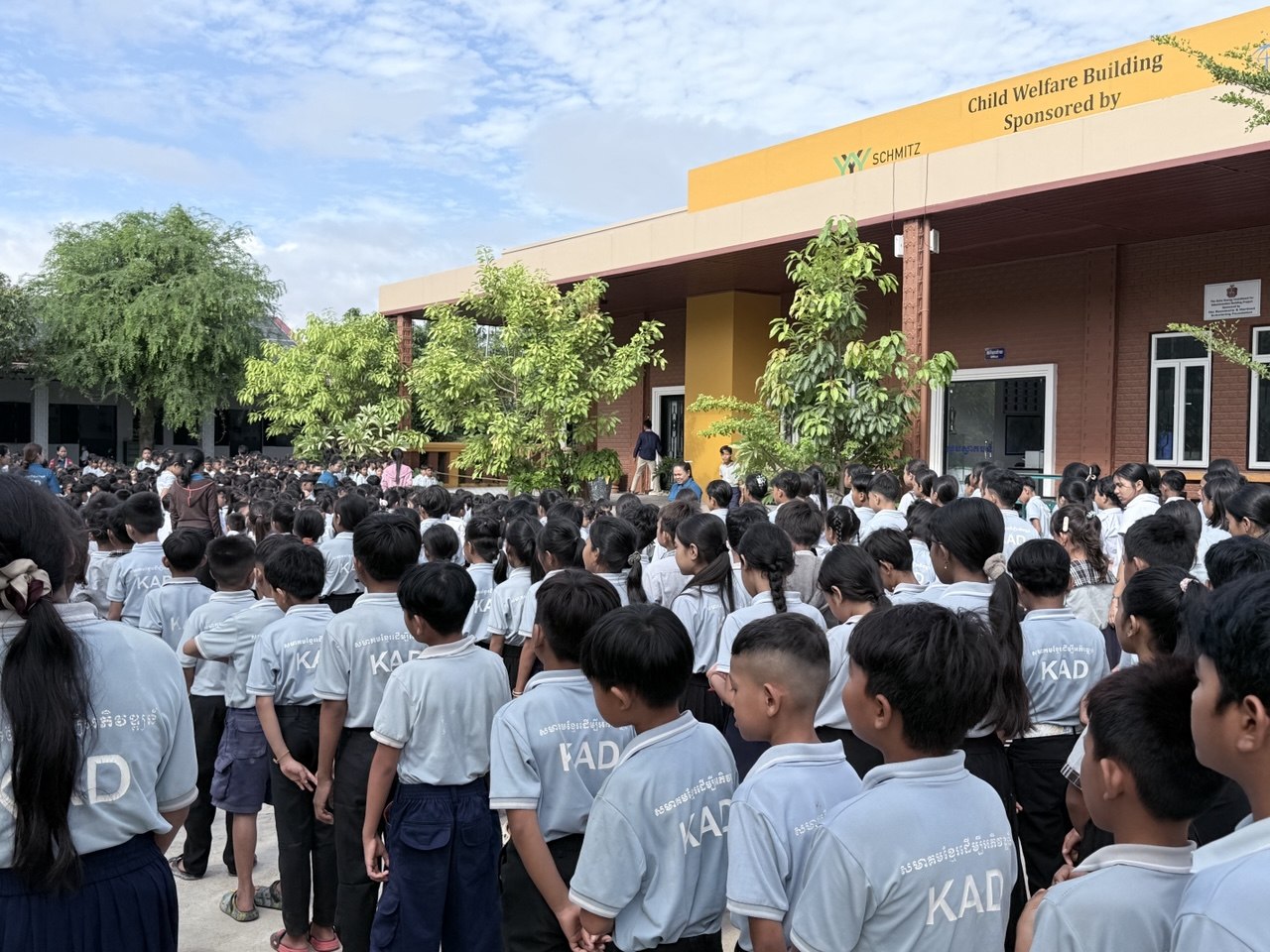
Project Activities:
1) Prepare and supply relevant documents and classroom materials/equipment both before and after the project operation, especially for instructional activities Five members of the Project Management Team including an executive director, a general program manager, an administrator, an accountant and an accountant assistant taking responsibility for the production of textbooks and preparation of classroom materials or equipment for children and for teaching activities of teachers. They printed out and bound some education related documents such as English textbooks, school record books, weekly lesson plan forms, school enrollment forms, monthly activity report forms, school record books, student status books and certificates. All teachers were required to make classroom decoration materials, but some others that couldn’t be self-made were purchased from the markets. Playthings for kindergarten children, Khmer-written textbooks like mathematics, Khmer literature, social studies and science and instructional materials were also bought from the markets.
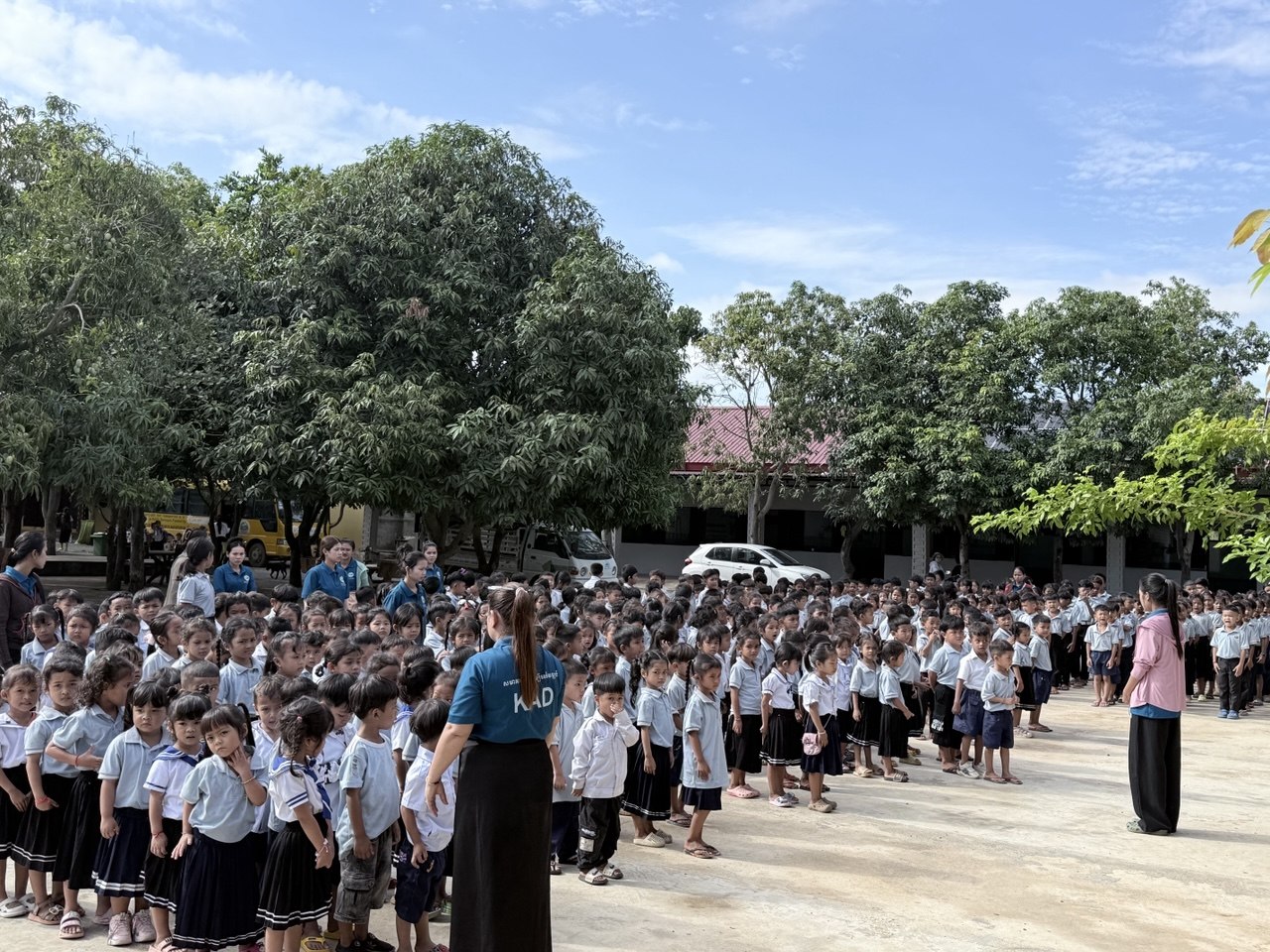
2) Hold a meeting with the children’s parents in terms of learning activities done in the following academic year and presentation of incentive gifts and motivation certificates to the best students The Project Management Team together with all staff and teachers organized annual meeting on October 26, 2025 in which 482 children’s parents and guardians were invited to participate so that they got lots of information in terms of their children’s study and strengthen more relationship and cooperation with the Team, aiming at improving the children’s education. During the meeting, they learned a lot about the past activities that were done and displayed by the Project Management Team, were allowed to express their opinions on their children’s education and requested for their close cooperation and active participation in the project implementation. In addition, the Project Management Team awarded incentive gifts and motivation certificates to the best students who came 1st, 2nd, and 3rd in classes.
3) Make the selection of students for class promotion at the end of each academic year Normally, at the end of October of the year, all students are required to take a short-term vacation registering the completion of the past academic year, and the new one starts on the 1st of November of the year. For the year of 2025, in September, all students took their 2nd semester and final annual tests, and then all teachers totalized the students’ marks or test results leading to the choices of the numbers of those who were able to be promoted to higher classes. In October, all teachers picked out the children, and made the lists of those who were graded well, rose up to higher levels and those who fell down to the bottom of classes were allowed to repeat the classes.
4) Make the weekly lesson plans for weekly instruction. Seeing that the lesson plans are vital for instructional activities, especially, they are involved in enhancing the area of education, all teachers were required to make and submit weekly lesson plans to the Project Management Team for review and decision before the classes started. The Project Management Team made some comments on their lesson plans after they had been examined. The textbooks were handed over to teachers to check the contents so that it was easy for them to teach their students. A computer room was prepared and equipped with five sets of computers set up for teachers to use to formulate the most needed documents used for teaching and other activities. In addition, the WiFi system was connected in order for all teachers to research the updated instructional strategies and something new for them.
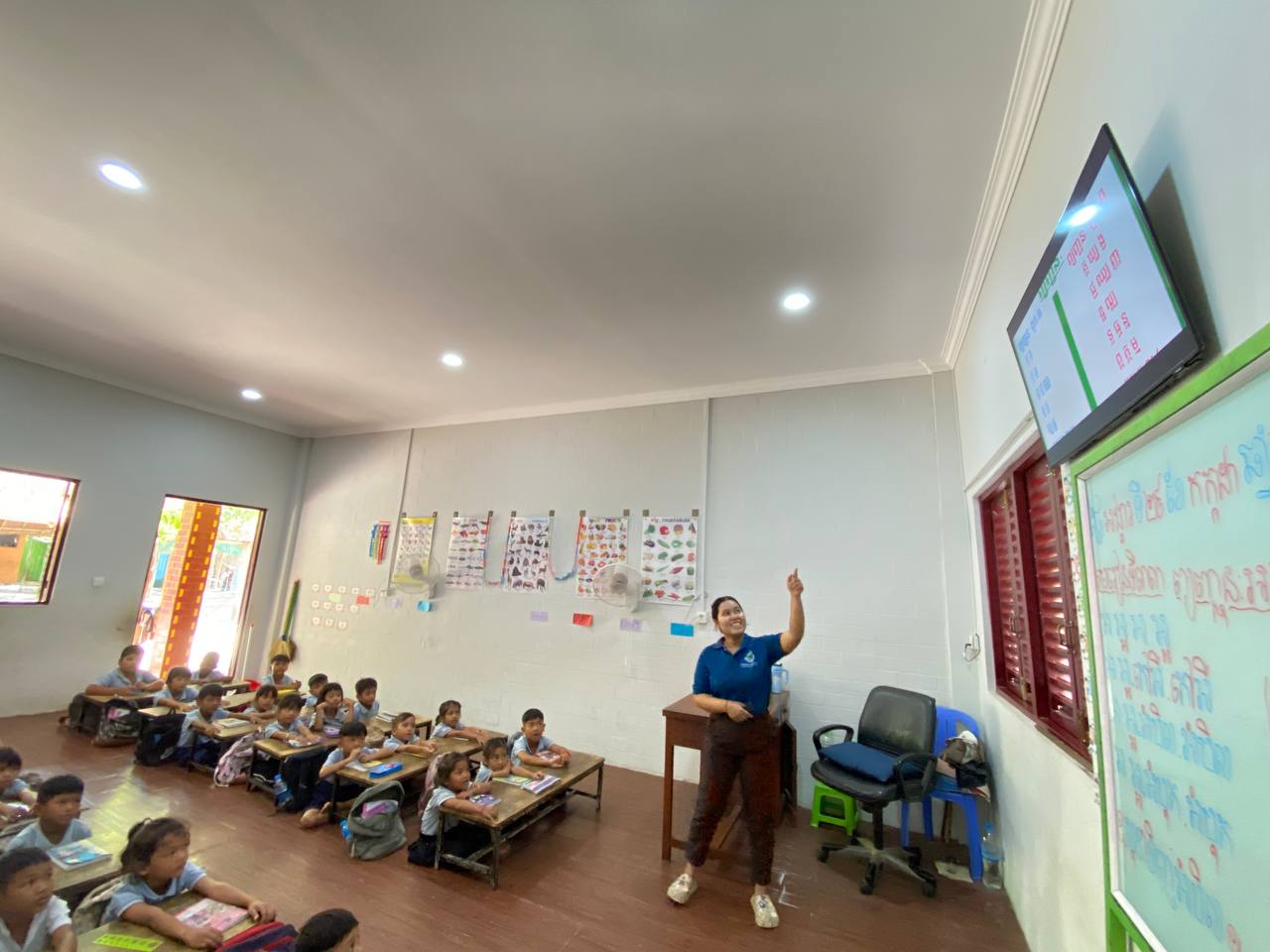
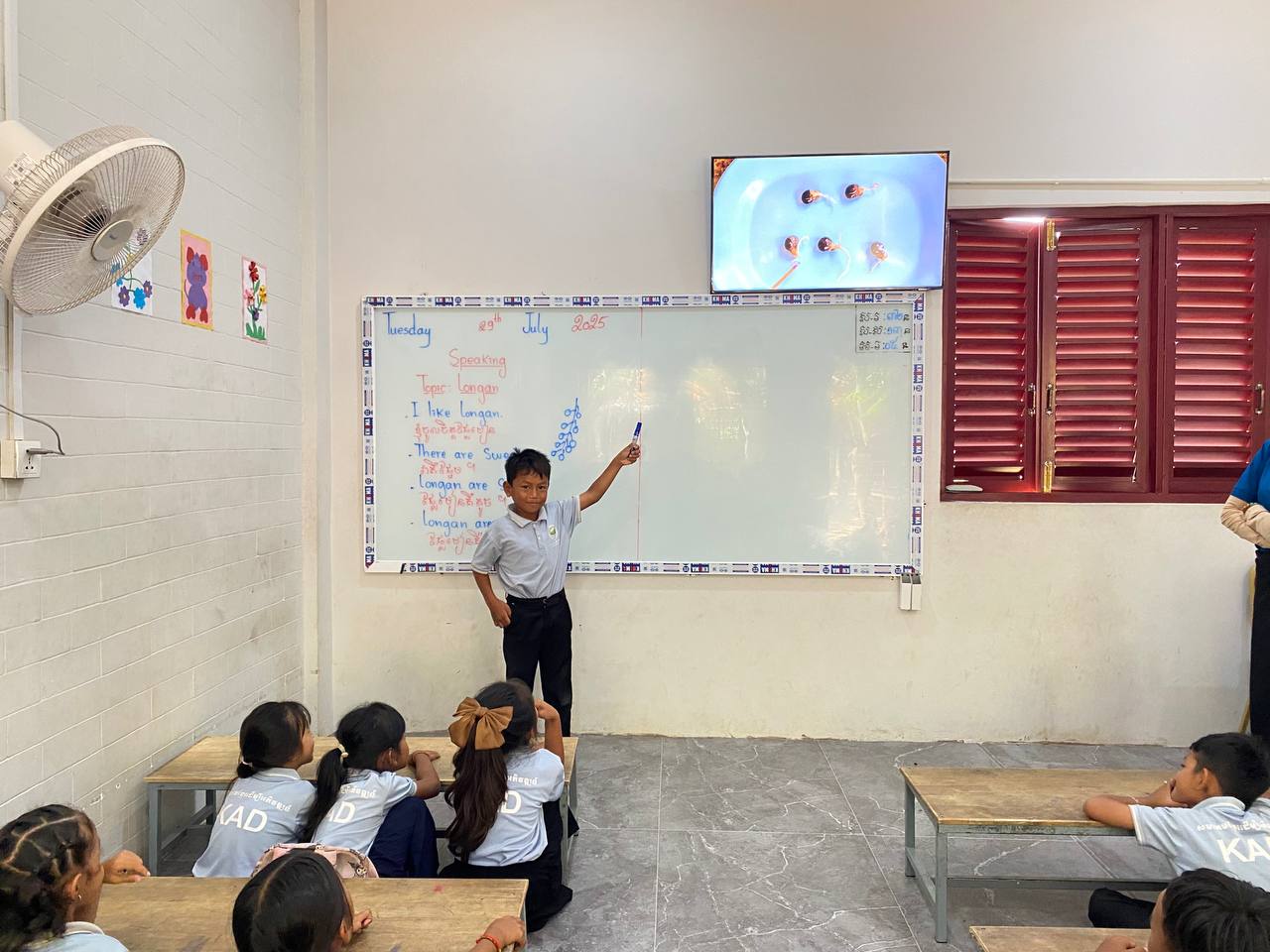
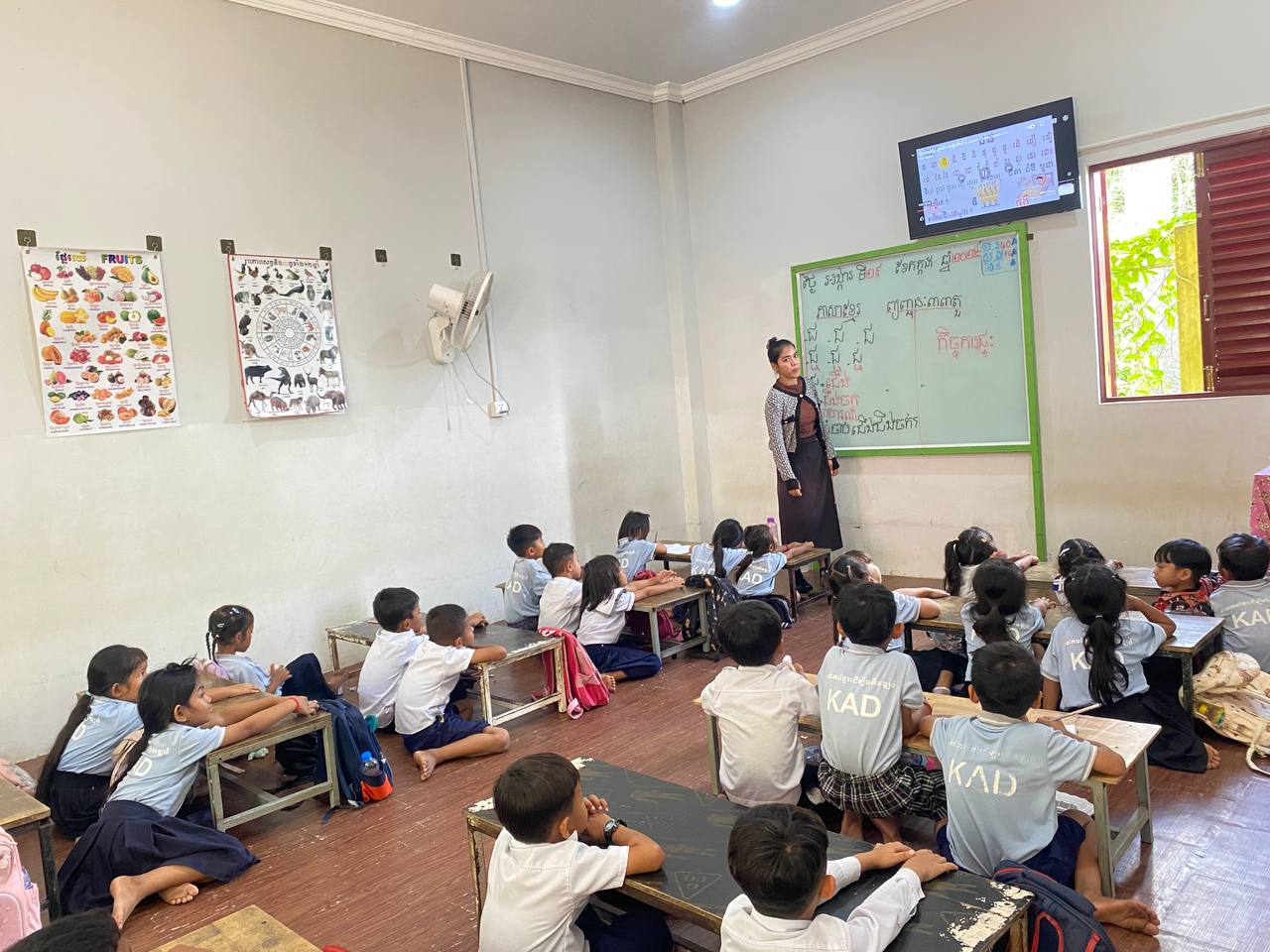
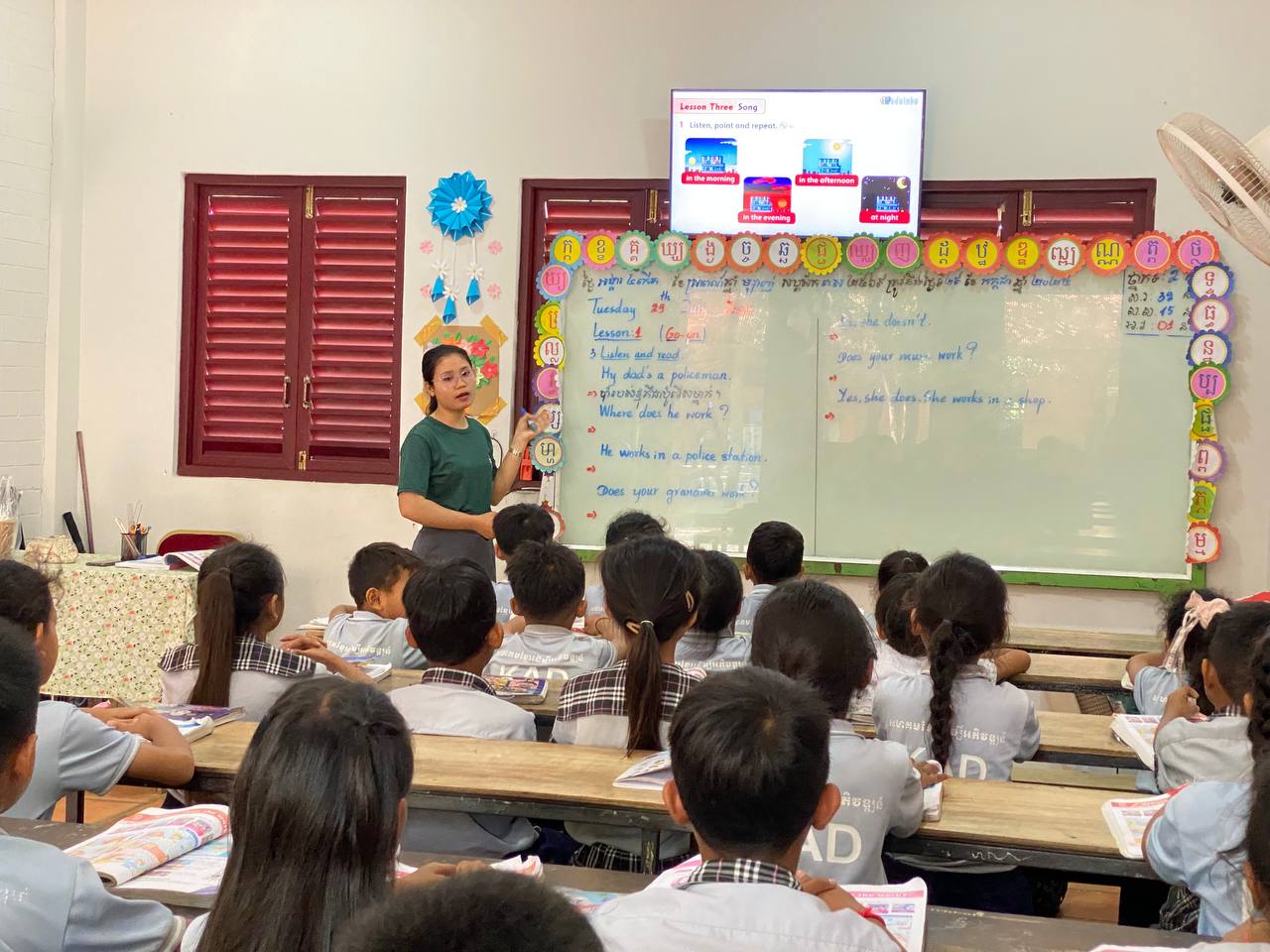
5) Carry out the daily teaching activities.
6) Give the monthly tests to measure the student’s ability and enter their marks, averages and grades into their school record books According to the monthly action plans made by the Project Management Team, at the end of each month, all teachers gave the monthly tests to measure the students’ ability by reviewing all the past lessons that had already been taught, and students were suggested to do the self-learning activities when returning home before the tests started. Teachers corrected the children’s exam papers and entered their marks, averages and grades into their school record books. All children’s school record books and student status books were sent to children’s parents or guardians so that they could know the past month’s study results of their children and make some comments.
7) Give the students the semester tests (1st and 2nd semesters) Besides the monthly tests, students were given the 1st semester examination taking place in mid June of the year and the 2nd semester one prepared in mid September of the year. The semester tests given in order to either measure the students’ capacity and or to promote them to higher classes. All teachers corrected the children’s exam papers and entered their marks, averages and grades into school record books and student status books. All children’s school record books and student status books were handed over to the children’s parents or guardians so that they could know the past month’s study results of their children and make some comments.
8) Organize the monthly meetings with all staff, teachers and members of the Project Management Team. The monthly meeting organization rests with the Project Management Team. Normally, there is a staff meeting that is organized once a month. During the project implementation, the members of Project Management Team, staff and teachers fixed up monthly meetings in order to:
9) Make the monthly teaching activity reports to be submitted to Provincial Department of Education, Youth and Sport. The project was officially recognized by the Provincial Department of Education, Youth and Sport of the Royal Government of the Kingdom of Cambodia and implemented in close cooperation with them. In addition, they always helped provide all teachers and child caregivers with further capacity building and good advice with regard to the teaching strategies. The Provincial Department of Education, Youth and Sport also required the Project Management Team to submit the monthly educational reports to them.
10) Organize further teacher trainings to consolidate all staffs’ and teachers’ capacity in duty fulfillment. Khmer Association for Development (KAD) never forgets its staff capacity building activities because they are considered to be the most priority plan to ameliorate the area of education for the interest of community children. Up to the reporting time, it sent all teachers and child caregivers to attend the teacher training workshop organized twice with one by the organization partners in Sihanouk Ville province and one another by the Project Management Team in KAD office, Kampong Speu on further instructional techniques or methods.
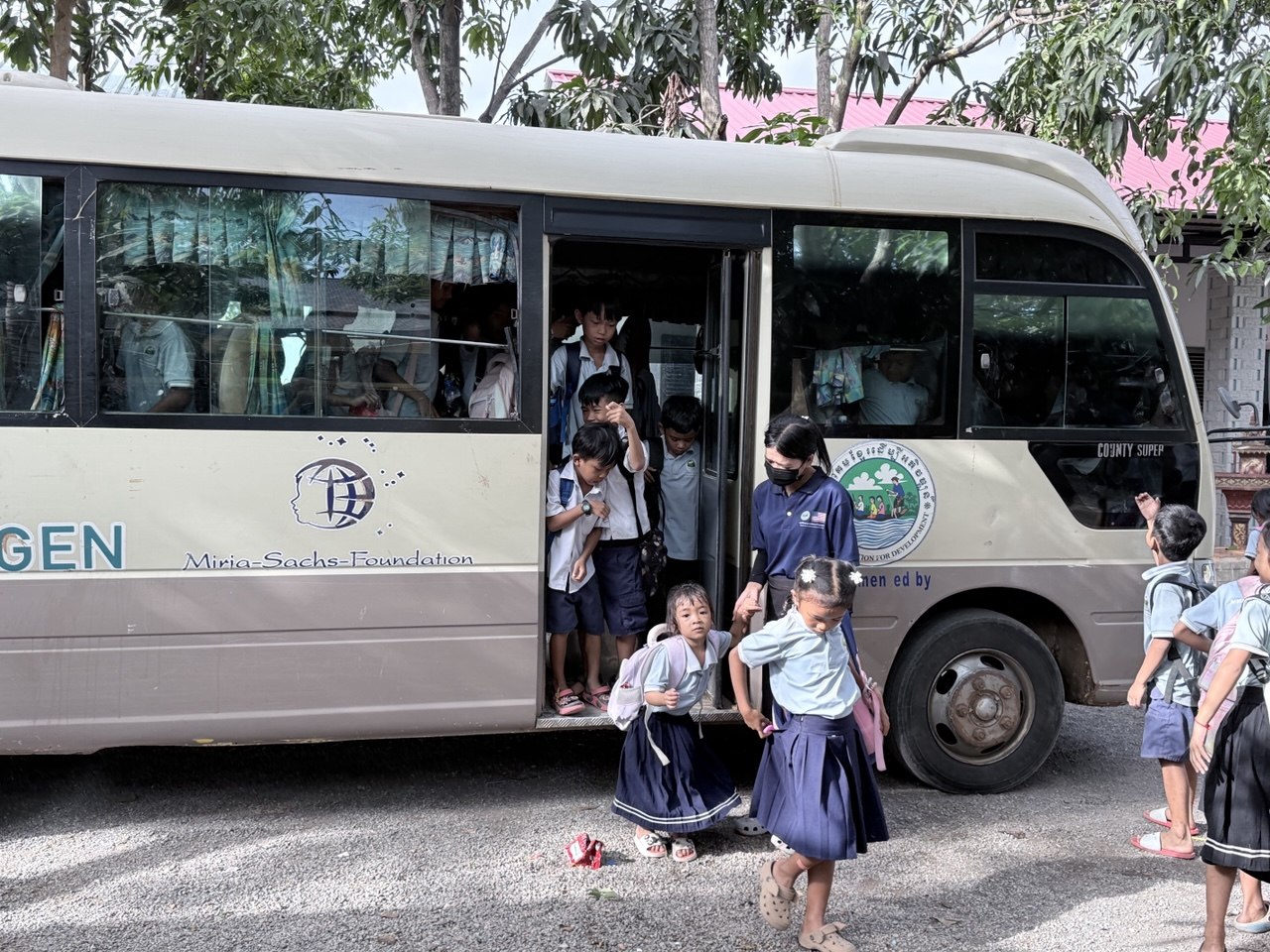
11) Transport children from their villages to Child Care Center Child transportation is the most important element of educational activities as all parents or guardians of children are factory workers (garment, shoe, zinc, food…) being swamped with work that makes them unable to make time to refer their children to school, so the best choice is that Khmer Association for Development must assist in facilitating the transport means to drive them to and fro. The Project Management Team prepared four minibuses and four drivers for transporting children. Early morning at about 6:00 A.M. drivers started driving out to their respective designated villages or destinations and came back to the Child Care Center at about 8:00 A.M., it took around 2 hours to do the transporting work. In late afternoon at 4:00 P.M. drivers had to drive all children back home, and their daily work finished after they came back to the Center. Apart from transportation, drivers were supposed to take responsibility for other tasks including vehicle maintenance, safety check amidst travel, avoidance of all kinds of child abuse and refueling.
12) Develop all kinds of infrastructure in the Child Care Center. The Child Care Center was established in 2011 and since then, it has kept developing many kinds of infrastructure to meet the priority needs of community children including a school building, a meeting hall, a bathroom, a vehicle garage, a water management system, a library, a street, a child health room, electricity, etc. in the academic years of 2025, Khmer Association for Development (KAD) has renovated the existing old school building with 8 classrooms and total size of 40m wide x 8m width x 7,50m high that is sustaining decrepitude, and up to the reporting time, the renovation work has been completed for 100%. The following work has been done by a group of 8 construction workers:
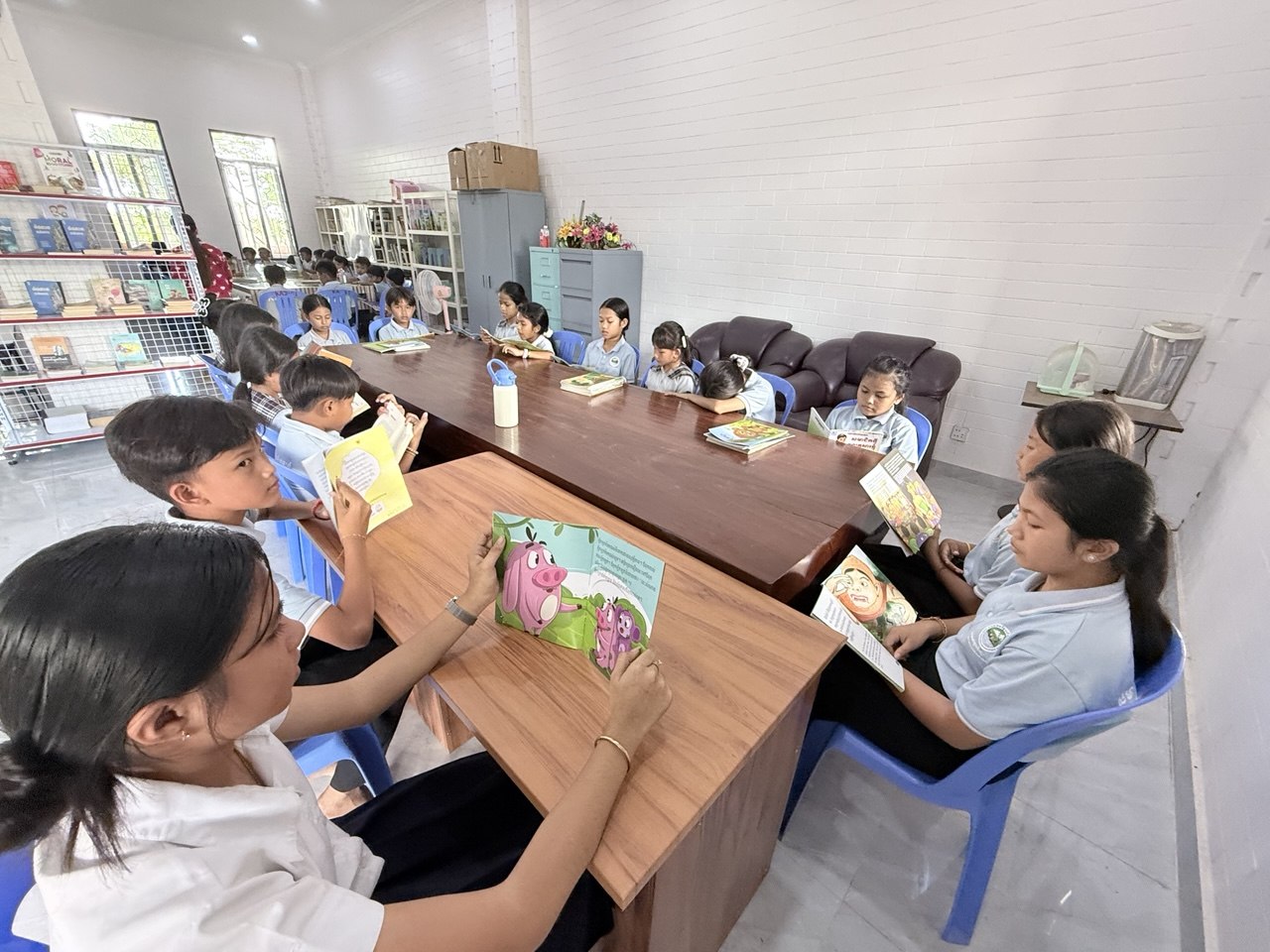
13) Promote the library book reading activities: Khmer Association for Development (KAD) has arranged a hall with the total size of 12m in length x 8m in width serving as a library in which several hundreds of both Khmer and English books have been stored. Normally, in rural areas of Cambodia, there’s rarely a library, and encouraging the community children’s book reading activity is very rare, so inspiring the community children with the habit of book reading is vital. During the break time, children were required to enter the library to read the books. One teacher was assigned to stand by in the library to help facilitate the book reading activity. When children didn’t know any word, they could ask the teacher to help explain to them.
Overall goal: To achieve a measurable and sustainable improvement in the welfare, promotion and protection of the rights and dignity of the vulnerable community children through the continuous development of the field of education.
Project purpose: To expand a broad access to good-quality education services for all local community children living in Samraong Tong district through the delivery of equal learning opportunity to them.
Project Output Over the period of the project implementation, the project has reached its achievements as follows:
The project effects on the community and the targeted people as follows:
Degree of attainment of the original project goal In order to accomplish the project goal, all project activities have been carried out, so up to the reporting time, it is noticed that the attainment of the original project goal has reached the degree of 100%.
Difficulties KAD has encountered in carrying out the project
Prospects and plans for the future of the project after the end of the grant period Khmer Association for Development is going to do some following activities that assist in enhancing its educational system: