Project Description
Khmer Association for Development (KAD) first set up the Community Children Development Center in November 2009 in Dok Por village in the purpose of providing the vulnerable children with development focusing on the fields of education and improvement of the rights to development, survival, protection and participation. Then, the Development Center gradually initiated and implemented some projects and activities including Community Early Childhood Intervention, School Dropping Out Prevention, English Access Micro-Scholarship, English Teaching for Community Children, Community Development and Health Education for Community People from which several hundred children and community people benefited.
At that time, a small house of villagers was rented and used as the Development Center, but due to a small space for accommodating several hundreds of children and for other projects, the larger Development Center was designed. Then, a plot of 50ms x 150ms land was purchased in Trakiet village, Trapaing Kong commune, Samraong Tong district, Kampong Speu province in order to construct the new Center called “The Community Children Development Center”. As of the year – 2011, Khmer Association for Development has gradually constructed the most needed infrastructures such as learning building, child care building, concrete water tank, playground, toilet, water system, etc. All the existing projects and activities were integrated into the new Center and then, the new other projects and activities were also initiated as well.
The Community Children Development Center has been located at the edge of Trakiet village, for about 230ms away from villagers’ houses, next to a big canal with water available both in rainy and dry seasons for irrigation and for other purposes. The surroundings of the land are farmland, palm and mango trees and sparse bushes, and the weather is good; there is fresh air and behind it during the rainy season, there is a lot of water flowing from the nearby canal, lake and channel, and a lot of fish comes with flowing water as well, and a lot of villagers come to fish every night. In addition, a lot of water birds come down to fish as well during the day, so it is concluded that the environment and landscape of this area is wonderful.
Up to now in the Community Children Development Center, many types of infrastructure such as two learning buildings, one warehouse building, one vehicle garage building, two concrete water tanks, four metal water tanks, two plastic water tanks, one water well, one child day care building, a meeting building, seven toilets, one chicken and vegetable farm, three fish ponds, a stretch of brick wall fence have been developed and a stretch of street in the Center has been constructed and remodelled. In addition, a large building used a volunteer homestay, an office, a library and a health care room was completely built last year, and early this year of 2024, one of old learning buildings was renovated, and up to now, the renovation work has been done up to 85%, and the rest will be expected to be completed soon. The vulnerable children such as orphans, children of low-income families and children suffering from domestic violence are selected from various villages in order for them to get access to the most priority services provided by KAD such as education, health, transport means, daily meals and education on morality and decency.
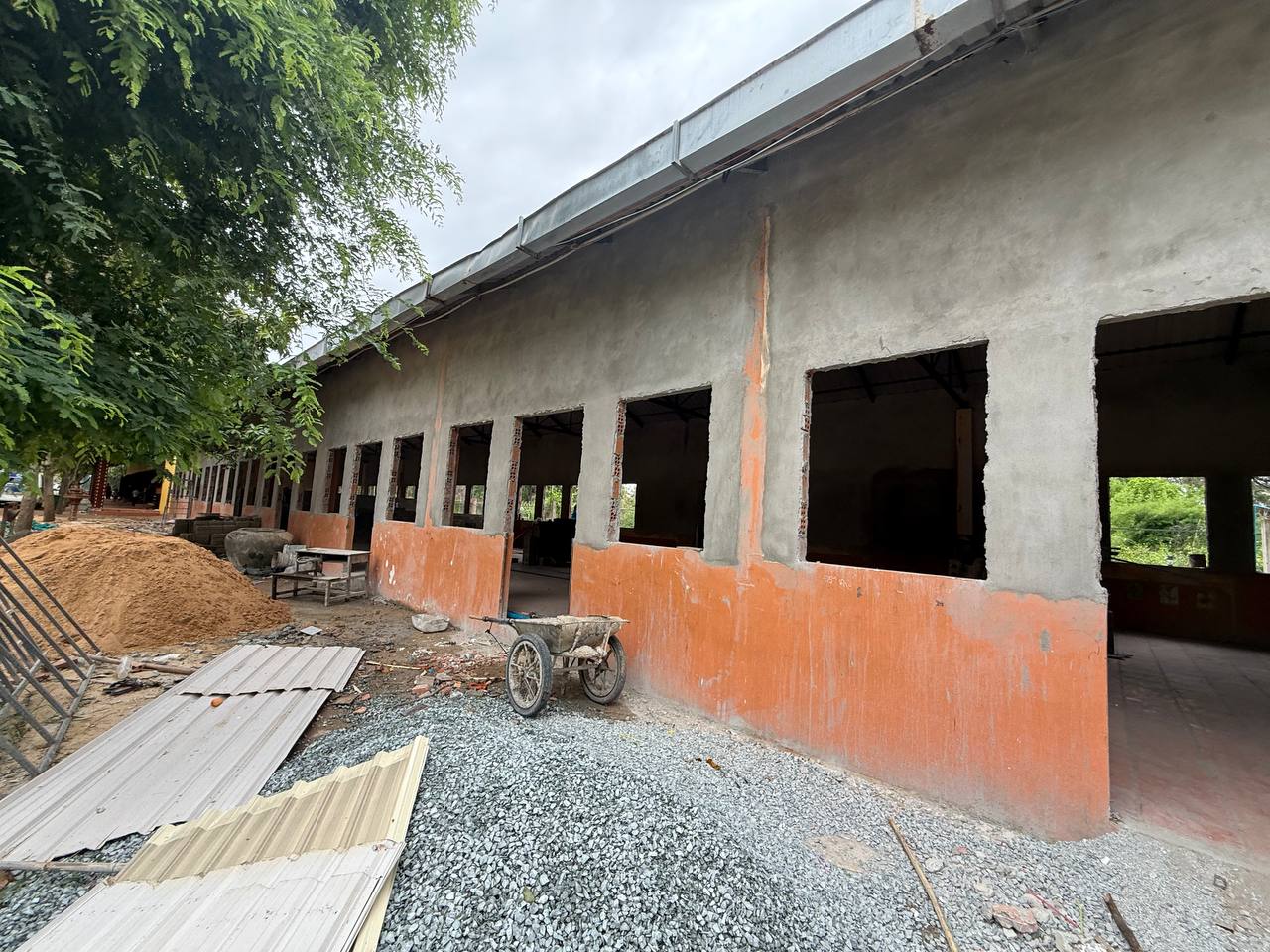
The Second Existing School Building Renovation Project – FY 2025 is also a part of the Child Day Care Service Provision project that currently takes care of around 748 children (both full-time and part-time classes), and for the time-being, this number will increase if there are sufficient rooms accommodating them. The project will be carried out by renovating a very old building with total size of 40m in length and 8m in width = 320m² that was divided into eight classrooms and constructed from bricks and zinc over ten years ago. This building has brick foundation, tile floor, metal doors and windows, plastic ceilings, zinc walls and roofs, but currently all the zinc walls, doors and windows have begun rusting that made lots of holes in them, and the plastic ceilings have begun decaying and gradually falling down. The most severe problem that children are now facing is that the sharp, pointed torn zinc walls, doors and windows always cut their hands, feet, legs and other parts of their bodies. As for the plastic ceilings, they always dropped on children sitting in classrooms that sometimes seriously injured them. In addition, some types of roof animals such as a gecko, a rat and mouse and a snake always caused a lot of problems too. The project will be implemented in order to get community children out of danger and bring about safety and security for them.
Target group
The vulnerable children including fatherless, motherless, parentless, disabled, poorest, migrant, those whose parents work for garment factories, construction contractors and live in low-income families will benefit from the project. They must be aged from three to twelve years. The target group will be divided into two kinds, direct and indirect.
Aims of the Project (long-term non-material and spiritual goals)
- To improve infrastructure in the Child Care Center that has prompted child welfare and promoted the rights to proper living.
Aims of the Project (concrete, measurable short-term objectives)
- To refine the living condition of community children by renovating educational facilities that can expand educational services for them.
Projected measures and activities (actions)
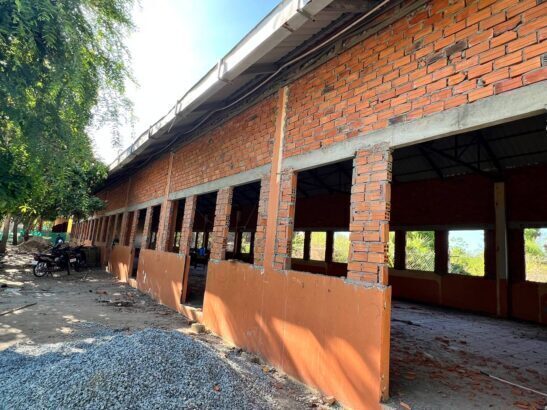
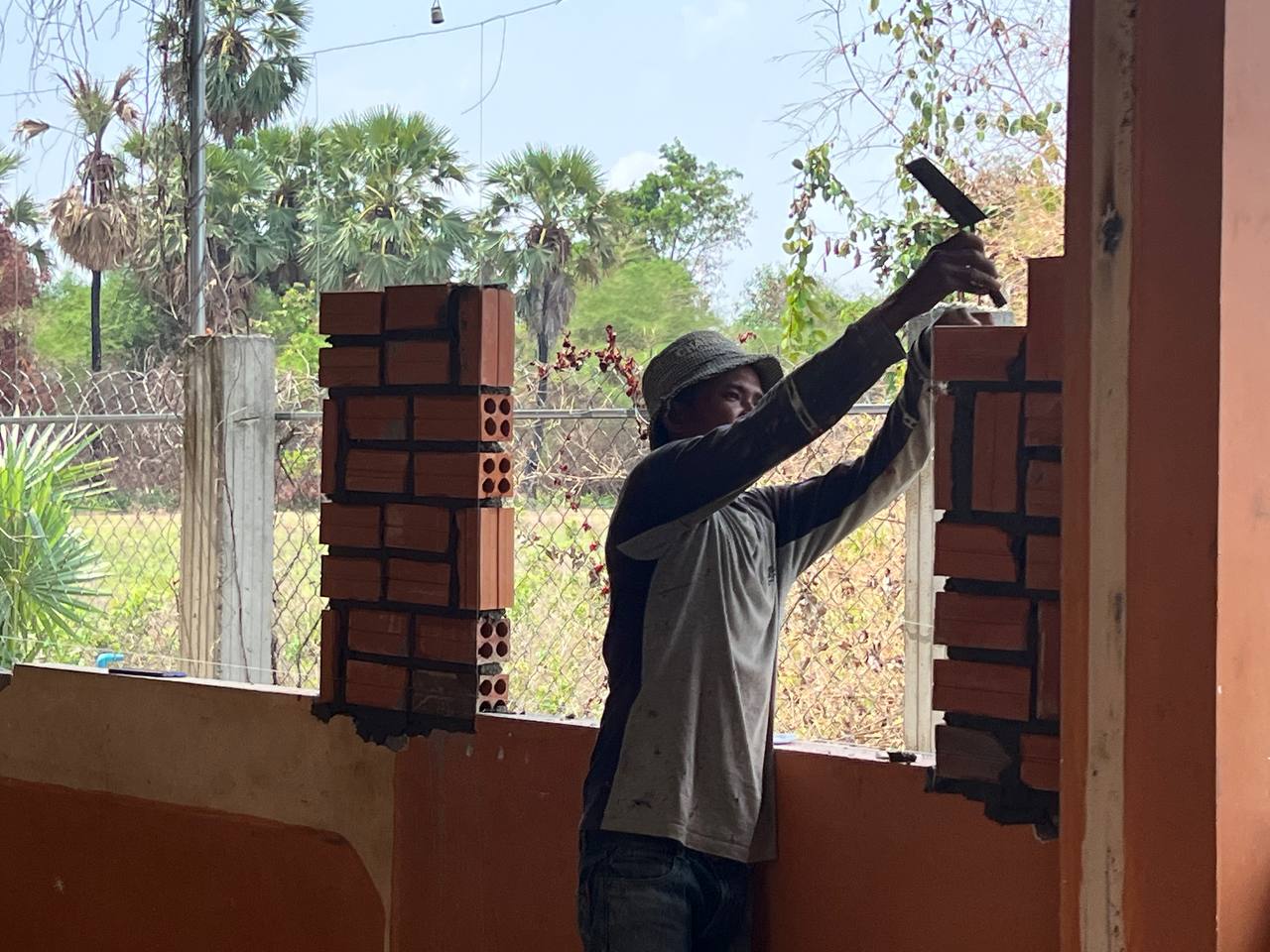
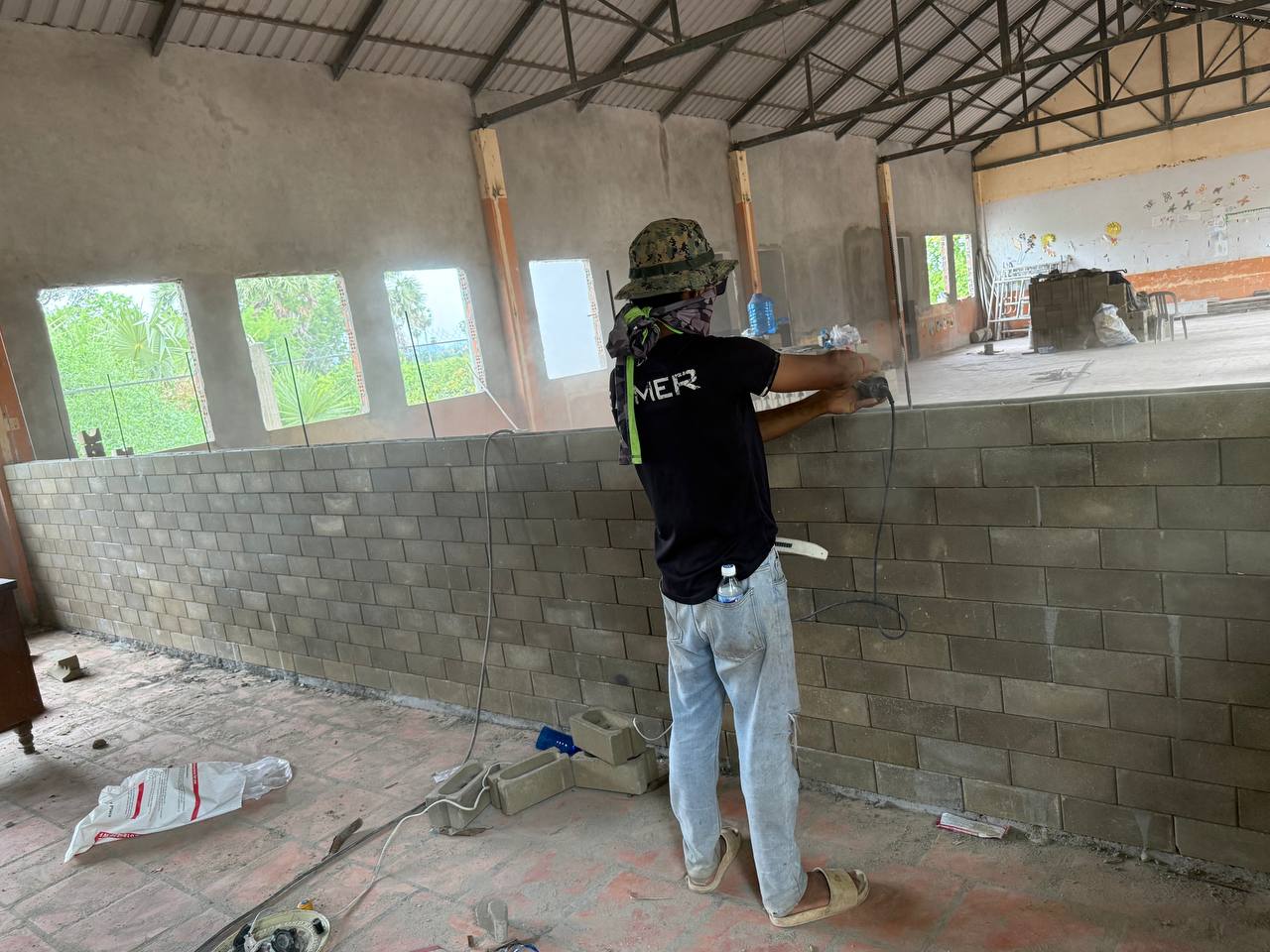
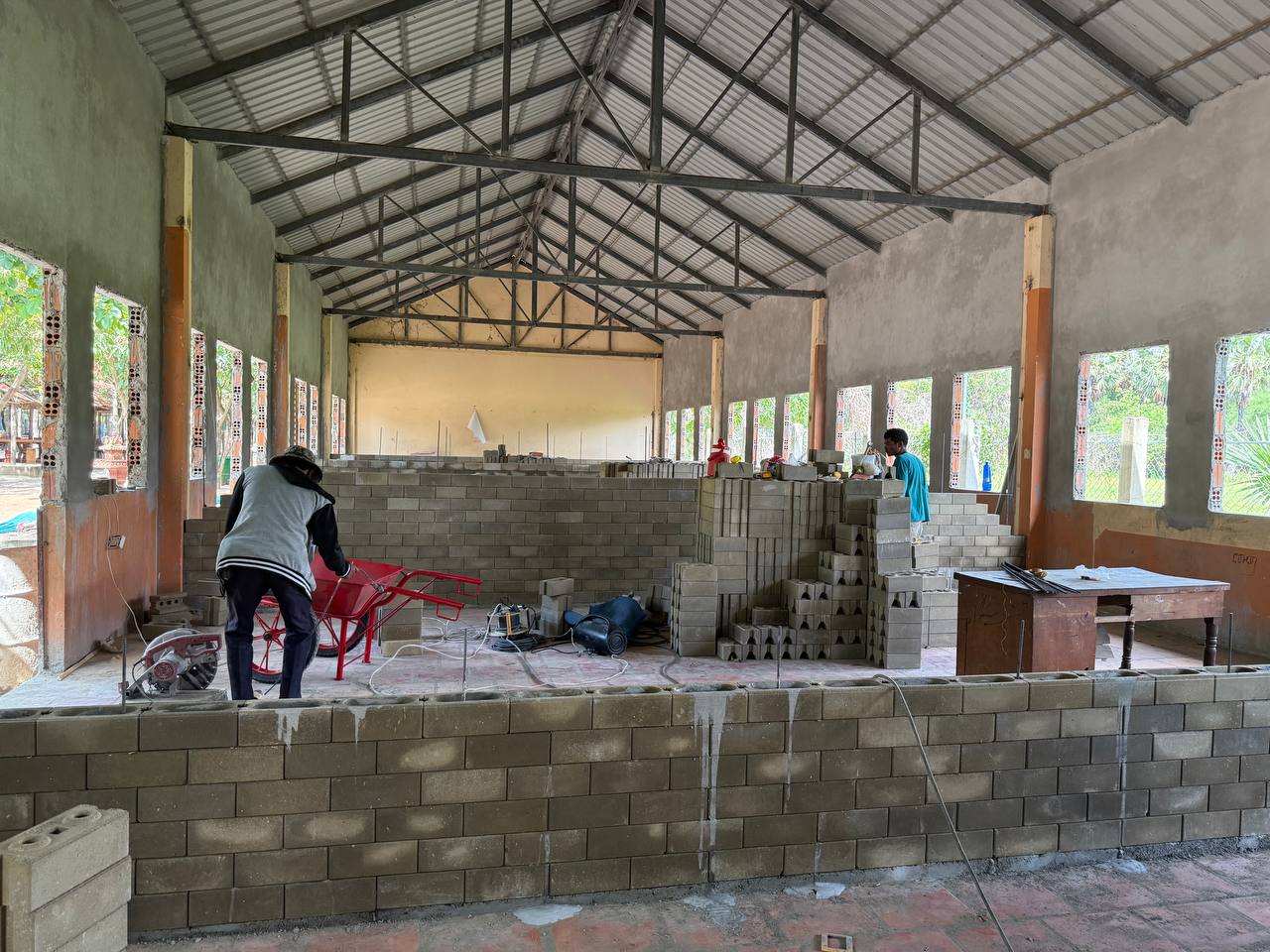
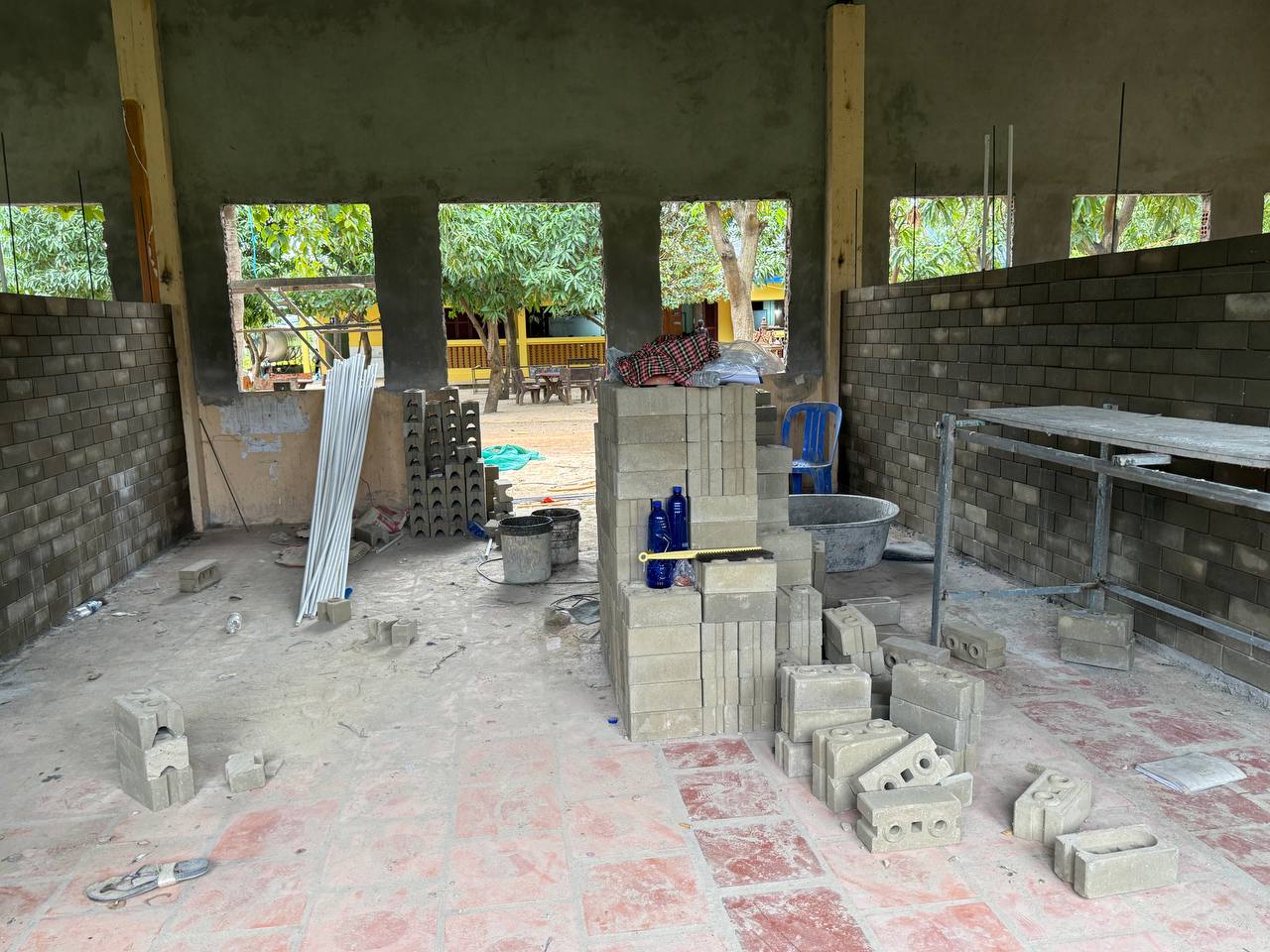
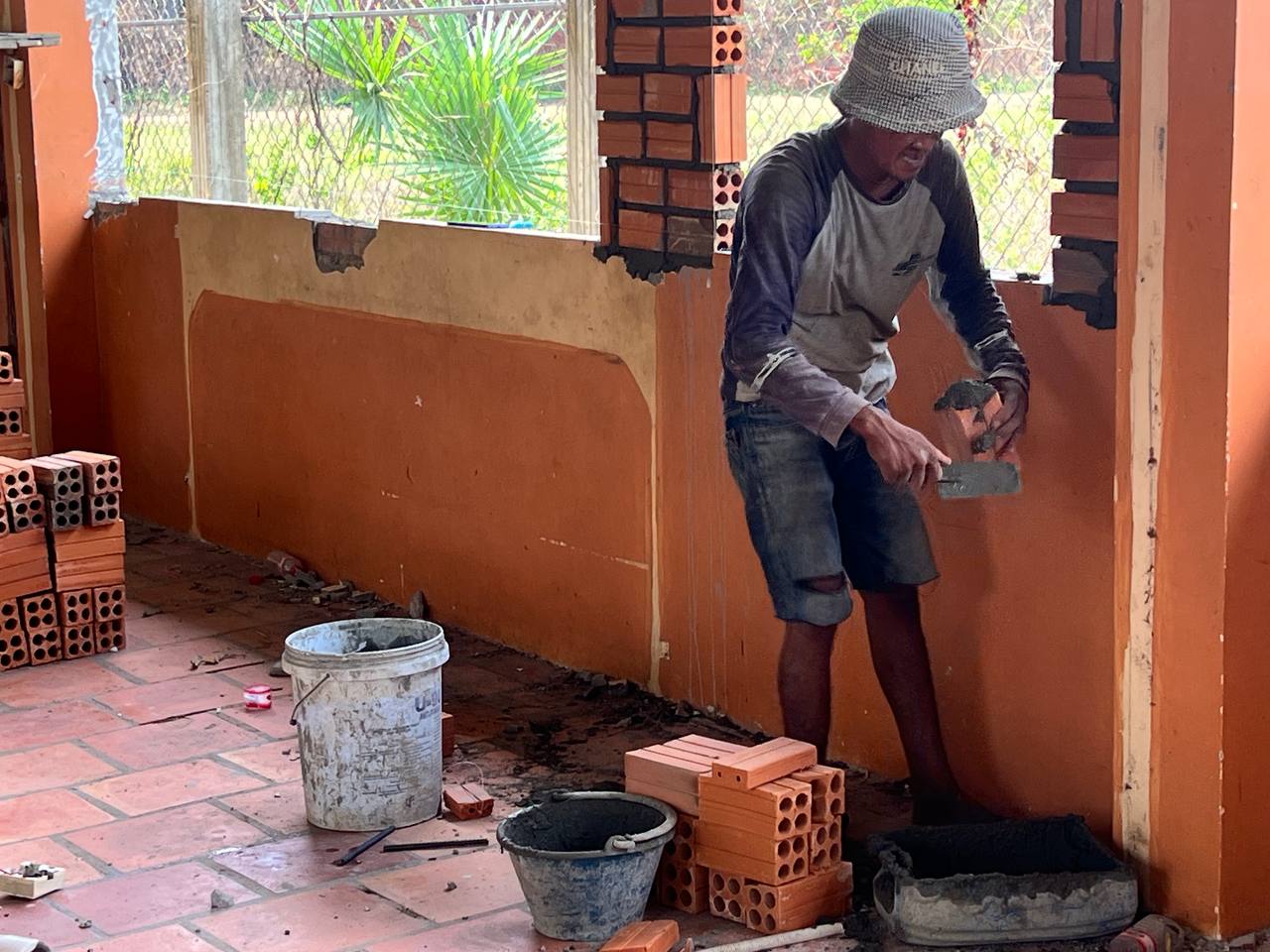
- Wall construction work in both inside and outside of the entire building was done – A group of ten construction workers and contractor was hired to contract the construction work by laying bricks around and inside the building and installing doors and windows. In addition, they worked on the walls by spreading cement and painting as well. The total size of the building was 40m long x 8m wide x 3.60m high, and it was divided into eight classrooms, and the size of each classroom was 8m long x 5m wide x 3.60m high. The project management team contacted local construction material suppliers to buy construction materials, and they negotiated the supply costs in advance of the construction processes.
- Electrical System & Ceiling Work was done – An electrician was hired to do electrical work by rewiring the whole building. The project management team bought the most needed electrical materials from electrical shops so that the electrician equipped all eight classrooms with electric contacts, electric fans, electric bulbs, sockets, etc. Apart from electrical work, the plastic ceilings were also installed in each of classroom, so all eight classrooms have had their ceilings.
- New Door and Window Frames were installed – The project management team contacted the construction material suppliers to buy metal materials to make doors and windows. A local iron worker was hire to produce doors and windows and installed them to the building. In the entire building, there has been 8 doors and 32 windows.
- Frontal corridors with roofs were constructed – When it rained, the frontal part of each class and students were subjected to the wet, so in order to forestall this problem, the roofs were built in front of the entire building. The project management team contacted the construction material suppliers to buy metal materials to make the frontal roofs to prevent children from being exposed to the rain. The total size of entire roofs is 40m long x 4.3m wide x 2.8m high. The local iron workers were hire to make the roofs.
- Frontal corridor floors with floor tiles were laid – When it rained, the floors in front of the building were slippery, so it was very hard for children to walk on them. A team of local construction workers were hired to lay rough tiles on the ground in front of each classroom, so for the time being, the children could walk on them during the rain with safety.
- The sidewalk behind the building was concreted – During the rainy season, grasses grew in bulk on the sidewalk behind the building that could serve as an inhabitation of poisonous snakes, so in order to avoid this problem, this area has been concreted. The total size of this area was 40m long x 4.5m wide.
- Rusty old zinc roof was replaced with metal tile roof, and new roof gutters were installed. The old zinc roof had been used for more than 10 years up to this report writing period. The roof then got older and rustier, and even there were lots of holes in it that caused the rain water leak through. In 2025, 640m² of zinc roofs were removed and replaced with the new ones. In addition, the total of 160m-long roof gutters was installed to catch the water rain as well.
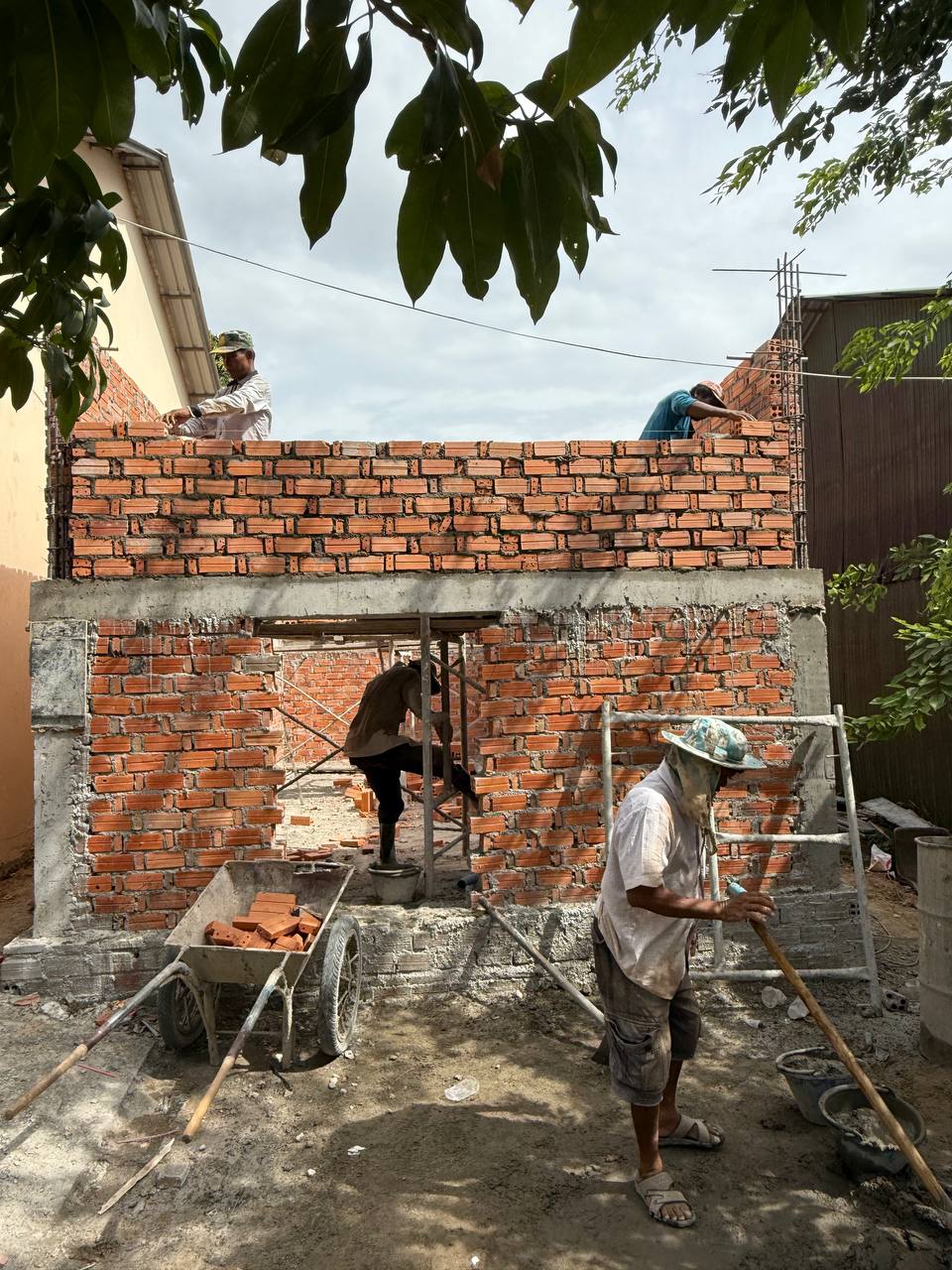
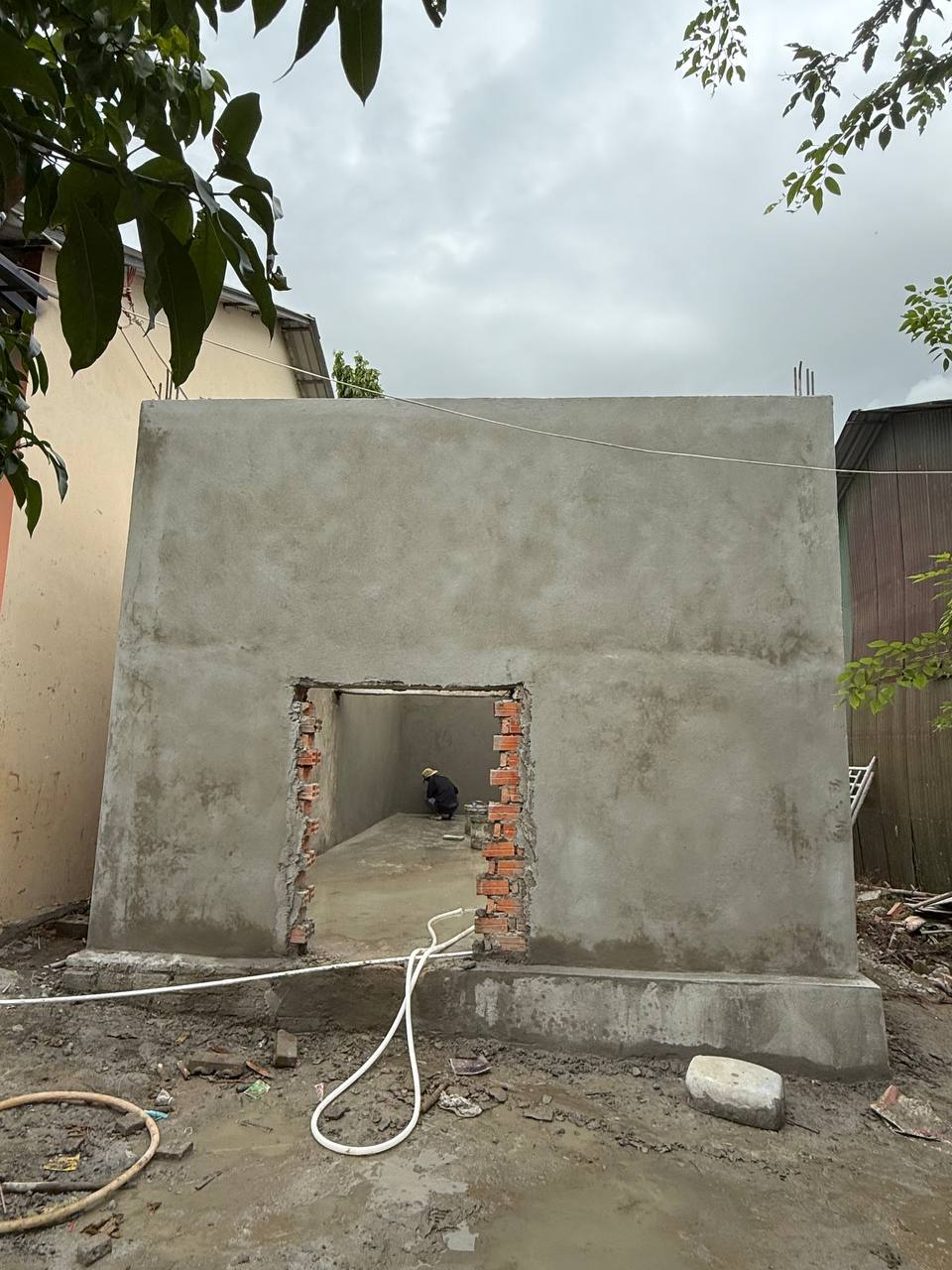
- The lack of waster for daily use remained a big factor for the community children who stayed all day in the Child Care Center. New concrete water basin with total size of 8m long x 4m wide and 4m high, storing the rain was constructed. The water basin was made from many types of materials such as cement, sand, granite, mile steel reinforcing bar and red brick.
Expected Project Achievement / Output
- A good learning building with total size of 40m long x 8m wide x 3.60m high was completely renovated by the end of 2025.
- All eight classrooms were equipped with electric and electronic systems, and plastic ceilings were installed.
- 8 doors and 32 windows were made and attached to the building so that it could protect all materials and equipment inside it.
- The total size of entire roofs of 40m long x 4.3m wide x 2.8m high were made to prevent children from being exposed to the rain.
- Frontal corridor floors of total size: 40m in length x 4m in width in front of the learning building were laid.
- The total size of the area behind the learning building was concreted, so children could walk or play on it safely.
- 640m² of zinc roofs were removed and replaced with the new ones. In addition, the total of 160m-long roof gutters was installed to catch the water rain as well.
- The new concrete water basin with total size of 8m long x 4m wide and 4m high, storing the rain was constructed.
Expected Project Outcome
- The children have had a proper learning building in which they could sit learning with safety and security from bodily danger.
- The classrooms have been well-arranged and well-equipped with the most needed materials so that children could sit and learn with cozy atmosphere
- With proper doors and windows, all study materials and equipment could be kept safe.
- The frontal roofs of the learning building have prevented children from being exposed to the rain.
- Frontal corridor floors of total size: 40m in length x 4m in width have been laid, so for the time being, the children could walk on them during the rain with safety.
- The frontal corridor floors of the learning building were laid, so for the time being, the children could walk on them during the rain with safety.
- The area behind the learning building has been concreted, so it could prevent poisonous snakes from coming into the school premise.
- The school building covered with new mental tile roofs have kept the children safe from the rain, and the roof gutters have helped catch enough water for sufficient use in both rainy and dry seasons.
- The new concrete basin has been able to store enough the rain water for sufficient use in both rainy and dry seasons.